
Brightside Intensive Outpatient Program (IOP) case study
A digital care experience for people needing more support: Designing Brightside’s virtual Intensive Outpatient Program for mental health and substance use recovery.
My role
Lead Product Designer
Team
IOP Team
For
Brightside Health
Year
2025-Ongoing
A clear path to feeling better, and staying better
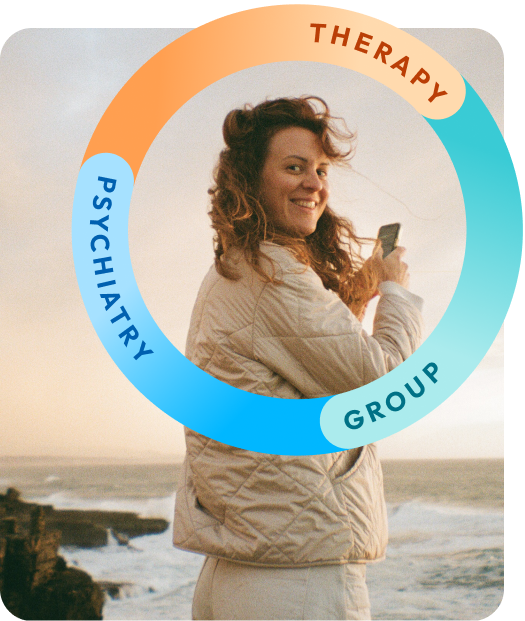
Brightside’s Intensive Outpatient Program (IOP) was created to support individuals with moderate to severe mental health challenges and substance use disorders—offering a more structured level of care than traditional outpatient therapy. Delivered fully online, the program includes weekly group therapy, 1:1 sessions, psychiatry appointments, and personalized skill-building content.
This case study shares how we built a digital experience around the IOP model—making high-touch, clinically rigorous care more accessible and supportive.
Create a supportive digital space that mirrors the structure of in-person IOP while meeting people where they are—at home, on their own terms.
Reduce emotional and logistical barriers by designing clear onboarding, simple scheduling, and guidance that helps members feel confident joining group care.
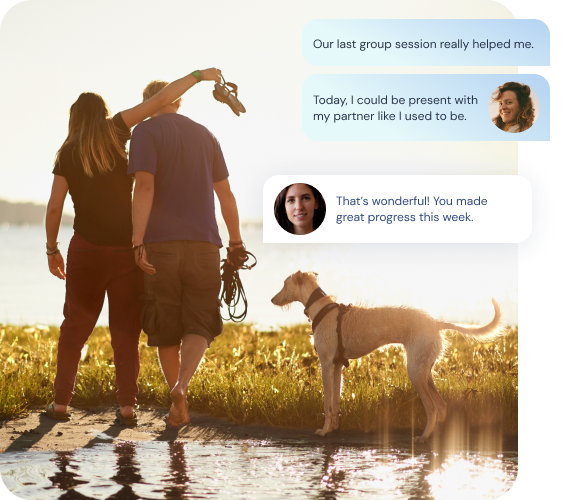
Build connection and trust through safe, reliable group sessions that help members feel less alone in their recovery.
Personalize each member’s journey with tailored lessons, progress tracking, and easy access to their care team.
Empower providers with intuitive tools so they can deliver high-quality, compassionate, coordinated care.
Support meaningful change by creating an experience that feels encouraging, grounding, and actionable every step of the way.
Our objectives
Brightside’s Intensive Outpatient Programs (IOP)
provide a higher level of care for individuals who
need more support than weekly therapy—
but without the barriers of traditional in-person programs.
By delivering structured, multi-session treatment entirely online, Brightside makes
intensive mental health care more accessible, flexible, and continuous.
My impact
I was the lead product designer responsible for the end-to-end product design and strategy of the IOP experience.
My contributions included:
Leading all product design work from concept through launch
Partnering with clinical, product, marketing and engineering teams
Creating flows, wireframes, and high-fidelity design for prospective members, therapists dashboard, admin dashboard, and the full member experience. (This led me to work with all teams within our company and a great learning experience for cross functional collaboration)
Supporting QA and iterative improvement based on user data
Ensuring accessibility, ease of use and engaging content for members
The problem
Brightside offered excellent 1:1 therapy and psychiatry—
but there was no structured pathway for individuals who needed a higher level of care.
We needed to build an experience that could support:
Group-based therapy with peer support
SUD-specific content and provider access
Multiple weekly touch points with a care team
A way to navigate complex care needs with ease
Ongoing support in between sessions
Goal setting and tracking post graduation
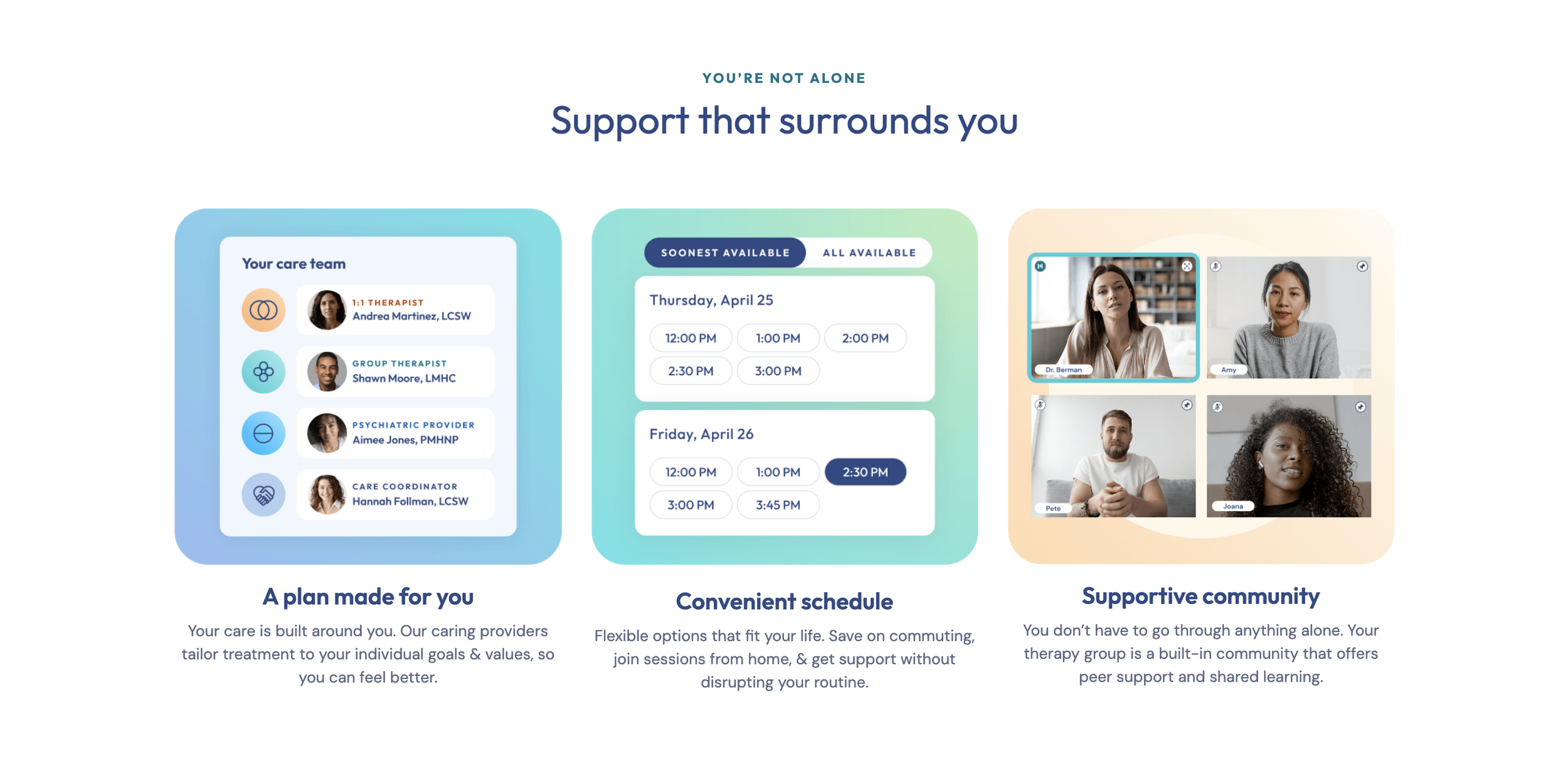
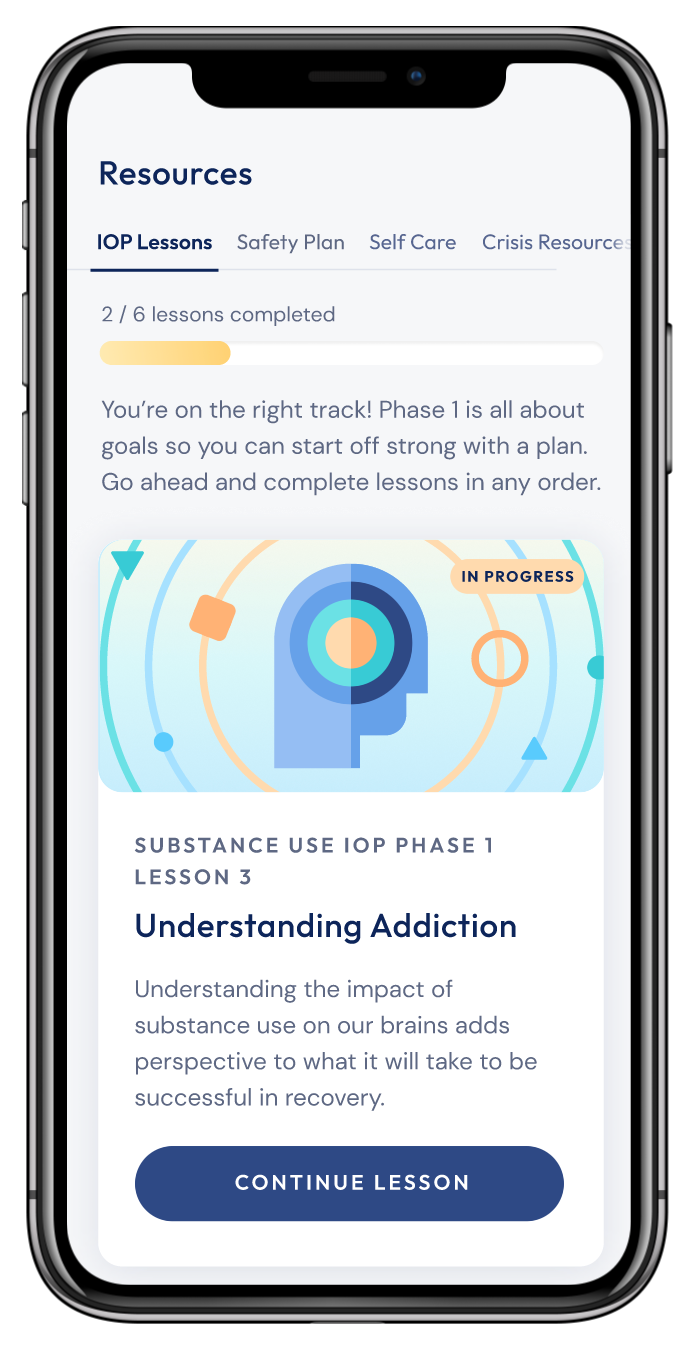
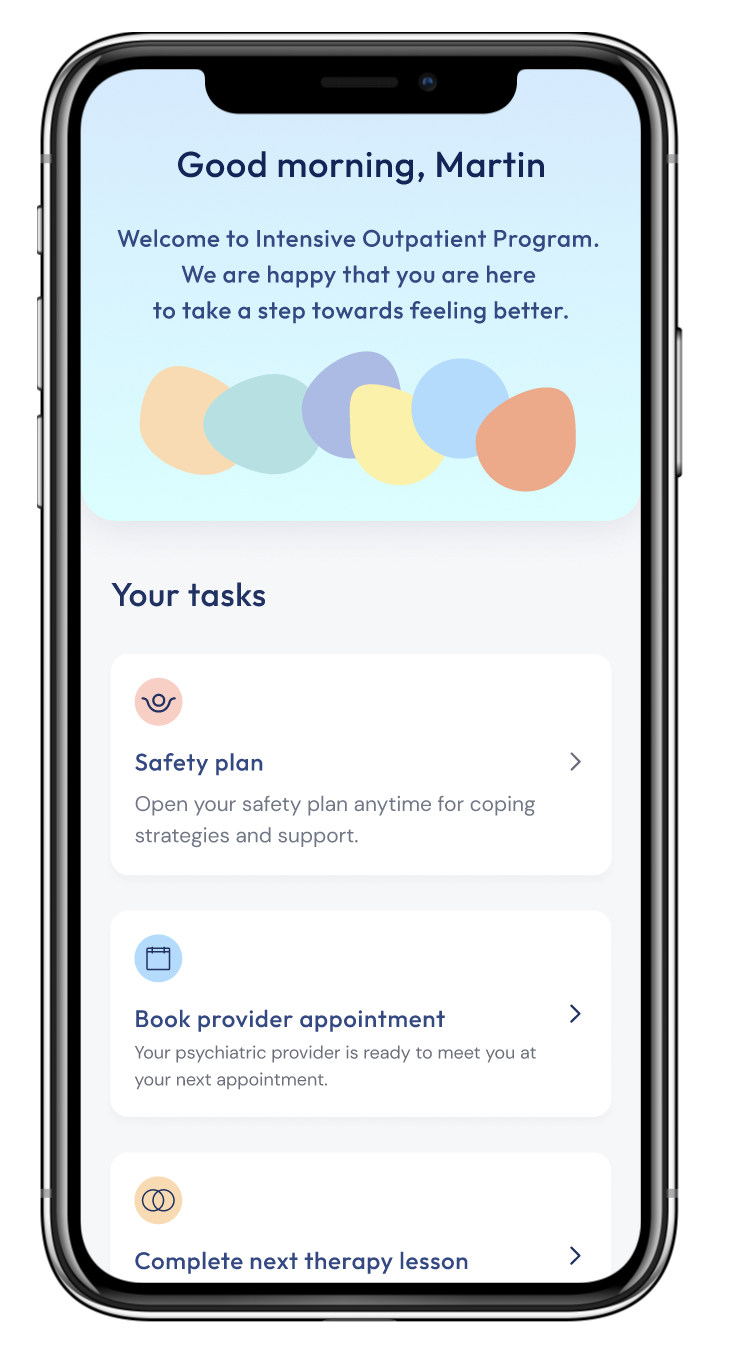
We designed a personalized, guided IOP experience that brings together therapy, psychiatry, self-paced tools, and community—all in one place. The platform allows users to attend live group sessions, message their care team, access custom therapy lessons, and track their progress week by week.
I worked closely with product and clinical stakeholders to translate the IOP model into a digital experience that could serve both mental health and substance use needs.
We broke the work into phases—starting with core user flows and gradually layering in group dynamics, personalization, and messaging.
Our approach
Discovery and Research
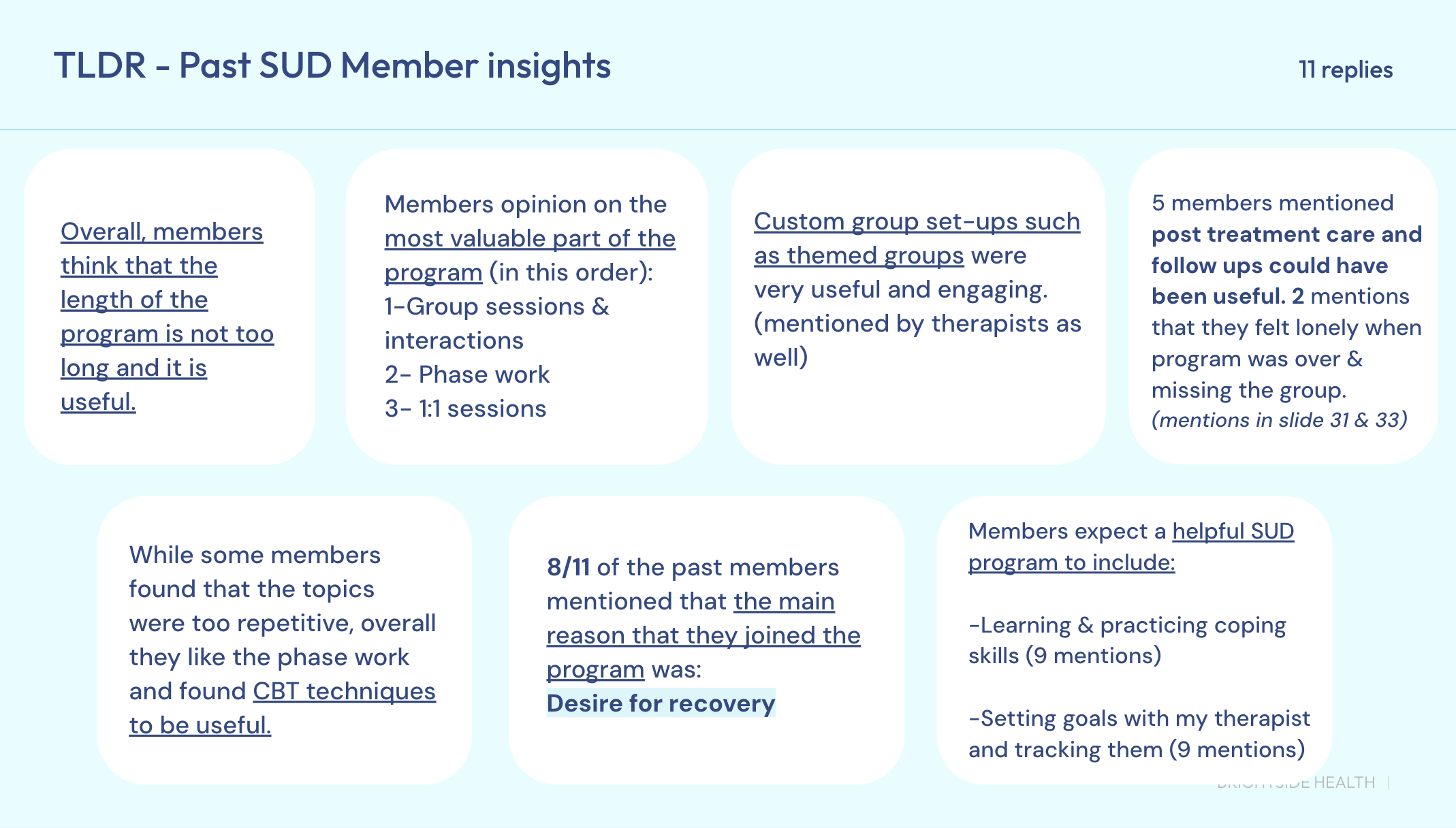
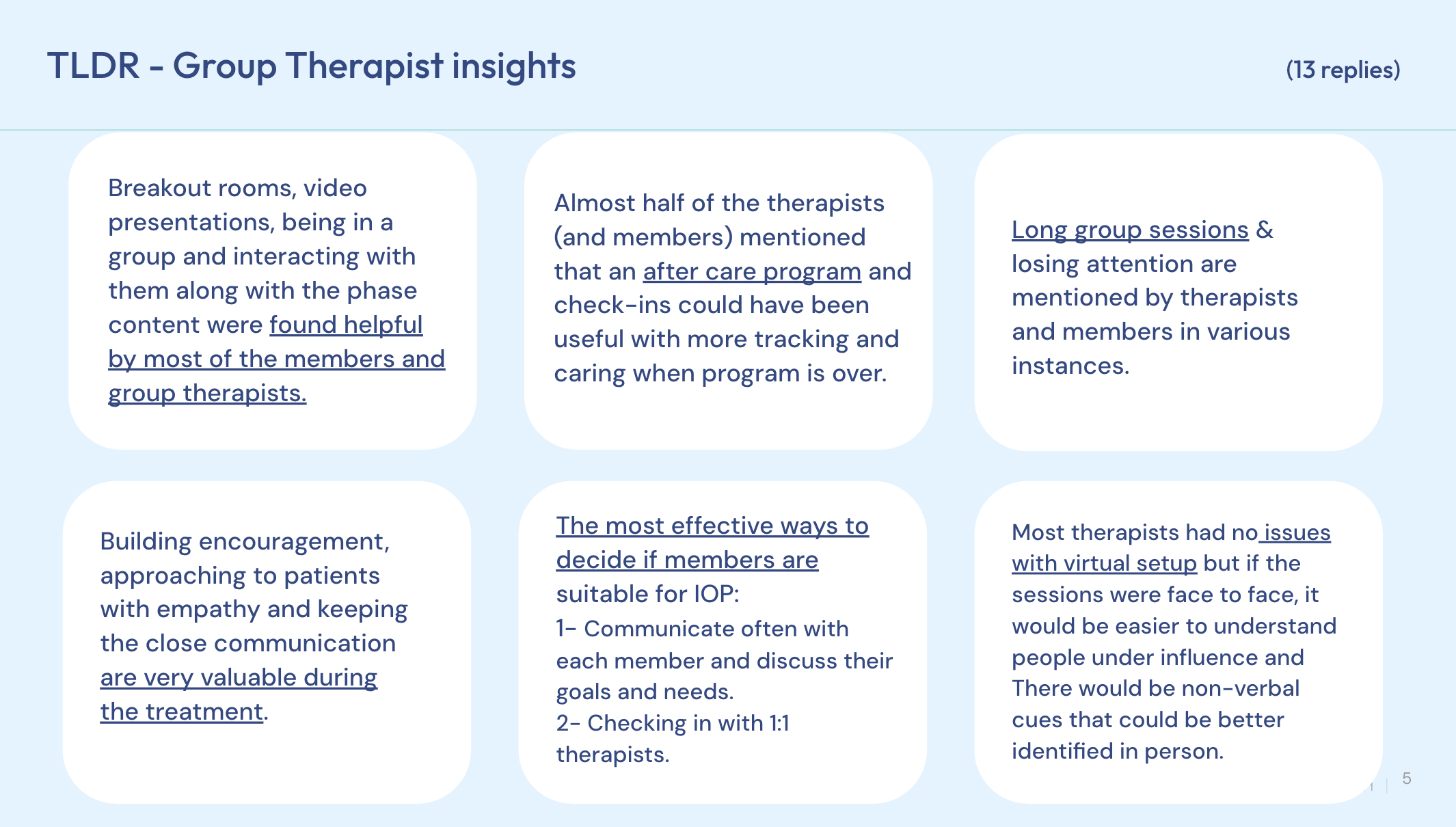
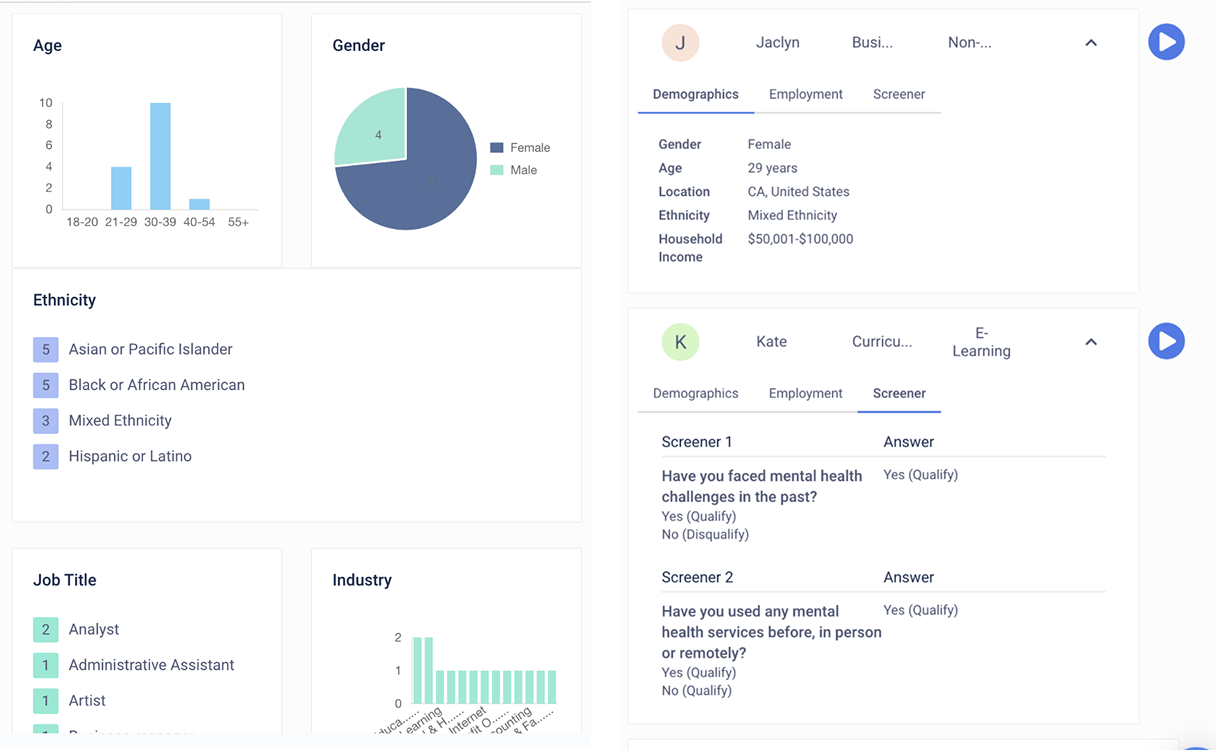
I partnered with our clinical team to gather insights from 1:1 therapists, care navigators, group therapists and prospective IOP members - including patients with a history of substance use.
We uncovered key themes:
Users wanted structure, but also flexibility
Members were interested in learning coping skills.
Trust and safety were essential in group settings
Messaging and scheduling needed to be seamless
Many were anxious about joining a group and needed a clear, supportive intro experience
Providers highlighted the importance of regular check-ins,
breakout rooms, and personalized care.
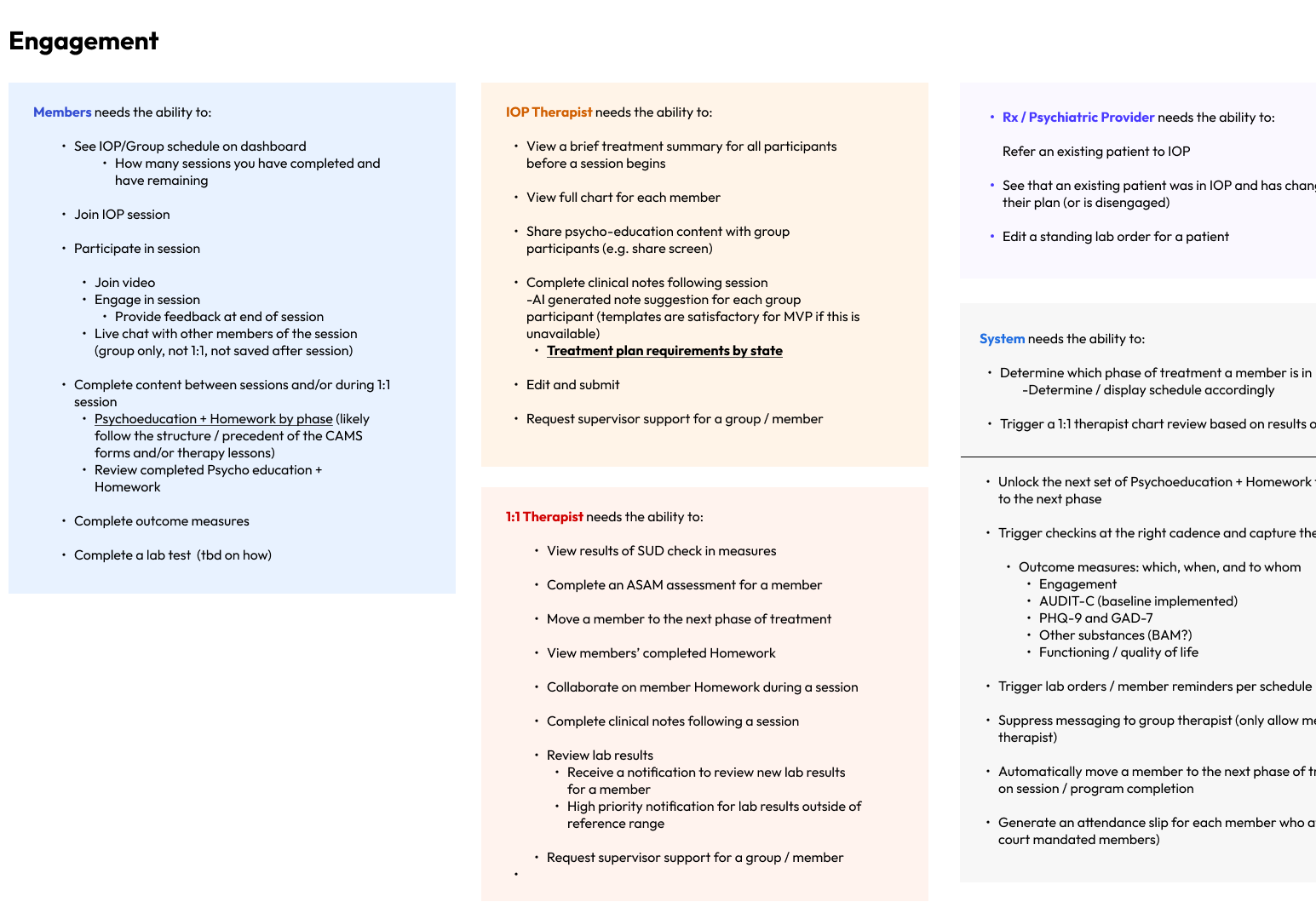
I mapped out user journeys across the entire program—from intake
to discharge—and designed wireframes for core features:
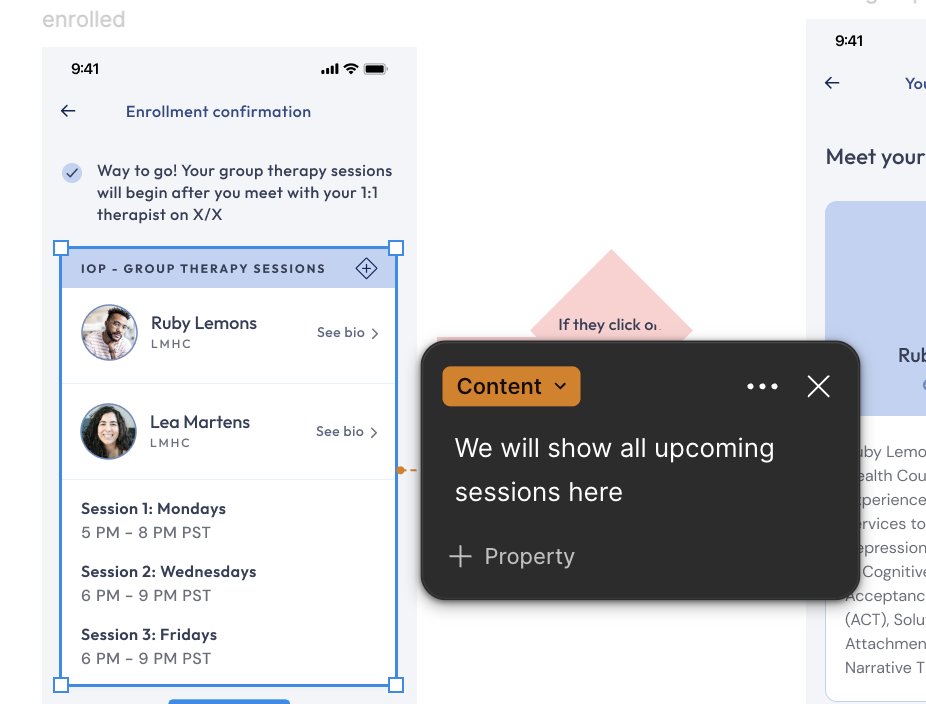
Group therapy session scheduling and joining
Messaging with care team and peers
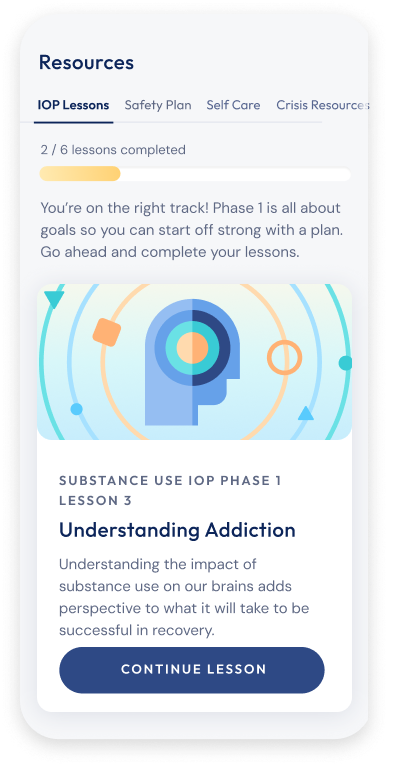
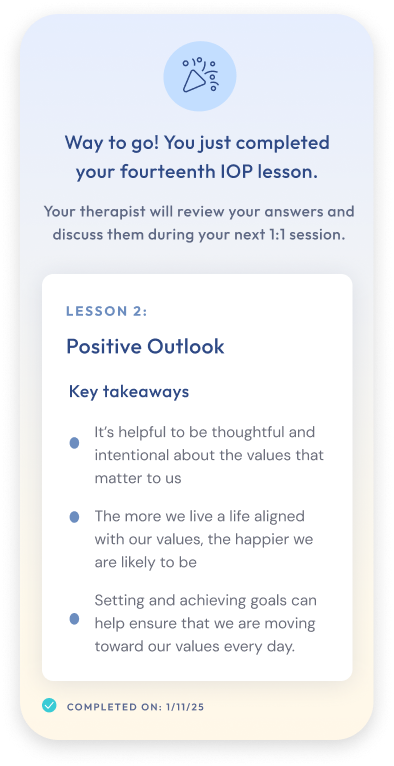
Therapy content library with lesson tracking
Medication management tools
Personalized progress dashboard.
These were shared early with stakeholders and clinicians
to gather alignment and feedback.
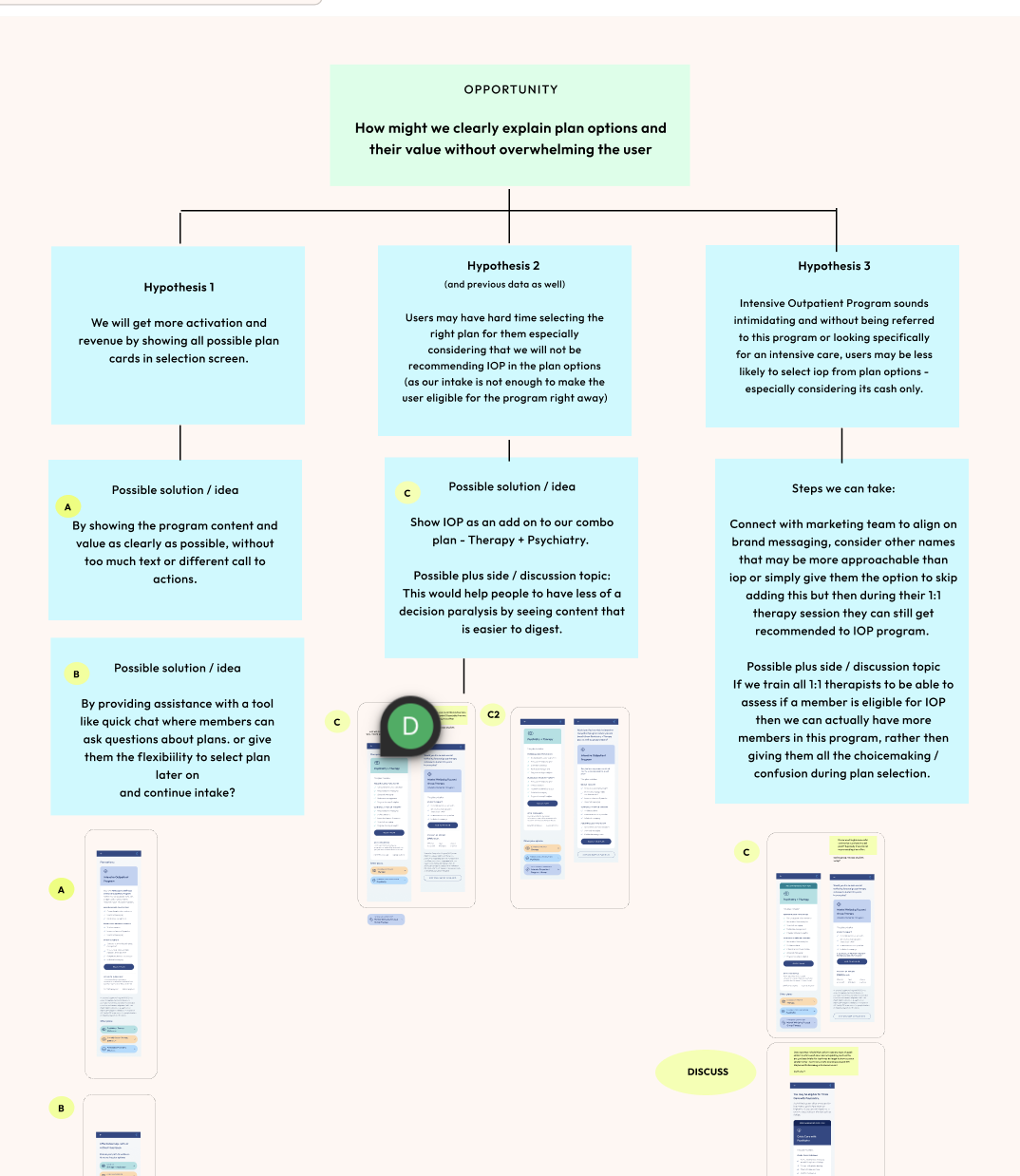
Ideation + Roadmapping
Usability Testing
We conducted two rounds of testing:
Round 1: Focused on how users understood and navigated group care and their weekly schedule
Round 2: Explored how users interacted with content, lessons, and provider messaging—especially around personalization and support needs.
Feedback helped refine onboarding, clarify scheduling flows, and improve access to care team support.
Visual Design and Content Strategy
Visual Design and Content Strategy
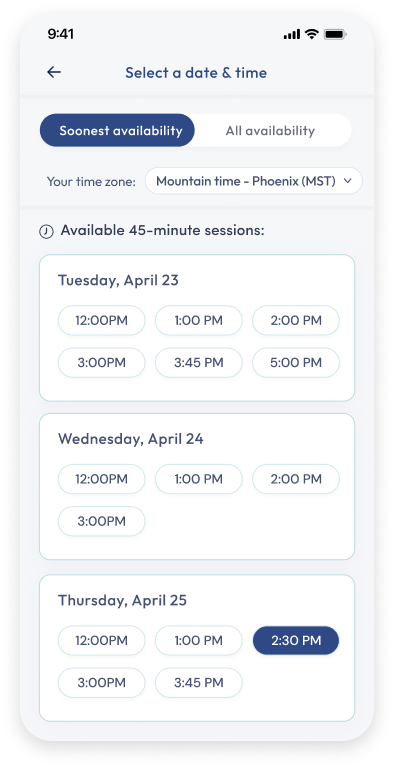
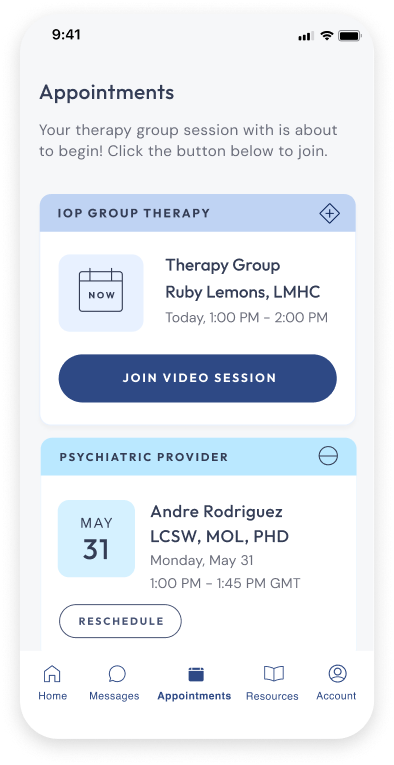
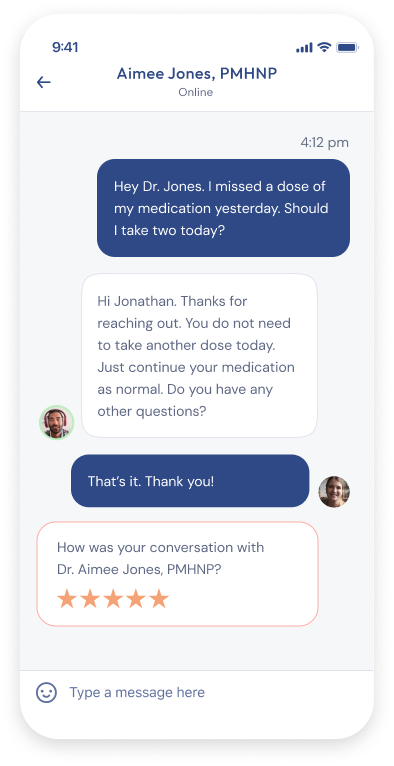
I developed a visual system that conveyed support, structure, and emotional warmth—tailored for a recovery-focused audience. I collaborated with the copy and clinical teams to ensure language was trauma-informed, clear, and encouraging.
Core features included:
Weekly group sessions with licensed therapists
1:1 therapy and psychiatry appointments
Interactive lessons and self-care practices personalized to each member
Messaging with therapist, group therapist, and Rx provider
Ability to connect with group peers for support
Support for substance use disorder and co-occurring conditions
Clear access to insurance and cash-pay options
Supporting the
full care experience:
Empowering providers through better tools and leveraging AI
This is a preview of the IOP Group Therapist Portal experience, designed to support providers in documenting and managing patient care.
Within the portal, therapists can seamlessly enter case notes, add diagnoses, collaborate with other therapists or psychiatrists for consultation, and communicate directly with patients.
As a net-new addition to our provider tools, this experience streamlines clinical workflows and reduces friction—making it easier for therapists to stay focused on delivering high-quality care.
Handoff to Engineering
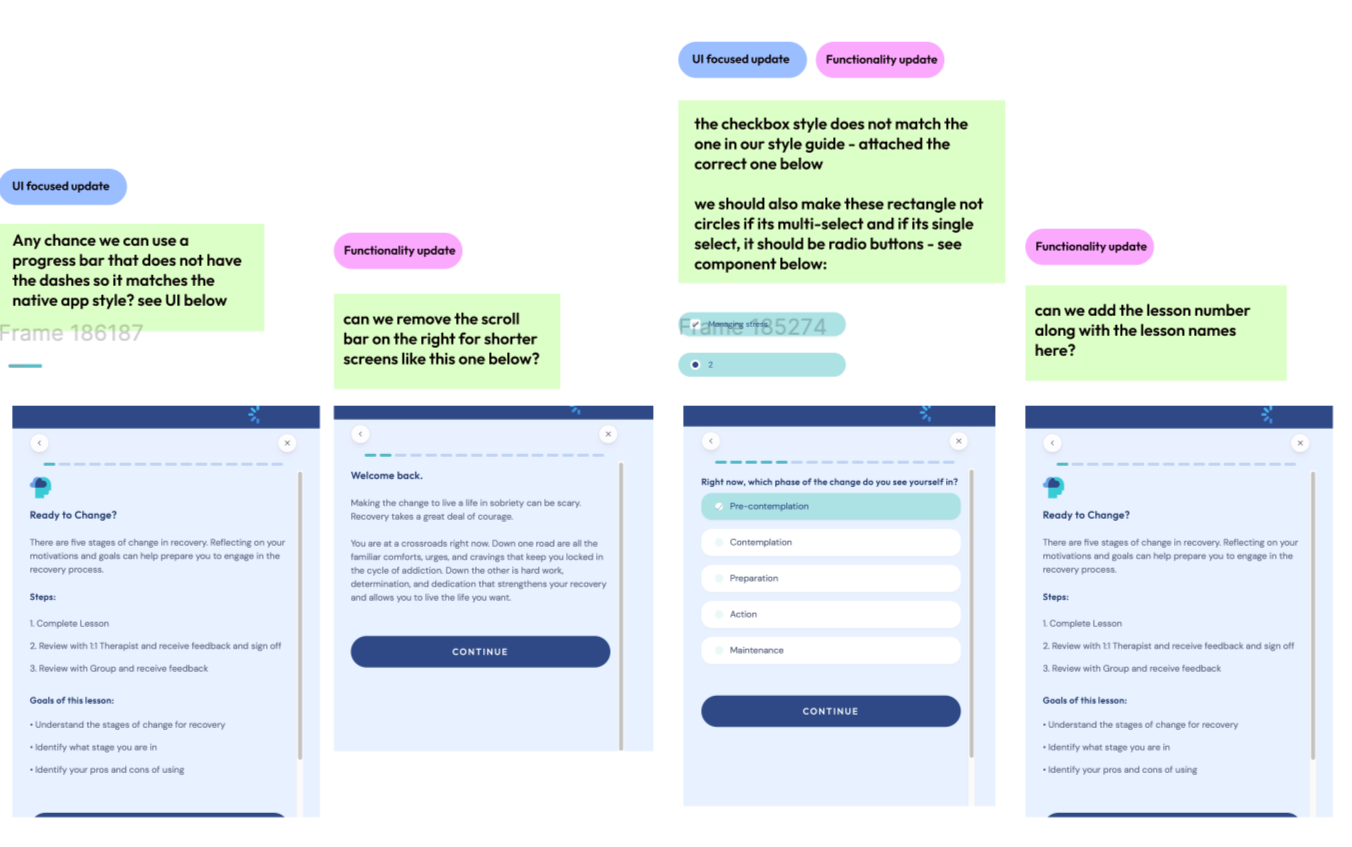
I provided detailed specs and flows in Figma and worked closely with engineers to support handoff, implementation, and responsive QA cycles. Given the complexity of provider abilities, and group scheduling logic, this phase required deep cross-functional coordination.
QA & Iteration Based on Data
Post-launch, we actively gathered feedback and usage data to guide improvements:
Added in-app surveys, NPS prompts, and FullStory tracking for user behaviour
Improved the onboarding experience to ease anxiety about group sessions
Refined messaging flows and notifications for care team access
Monitored engagement with lessons to surface the right content at the right time
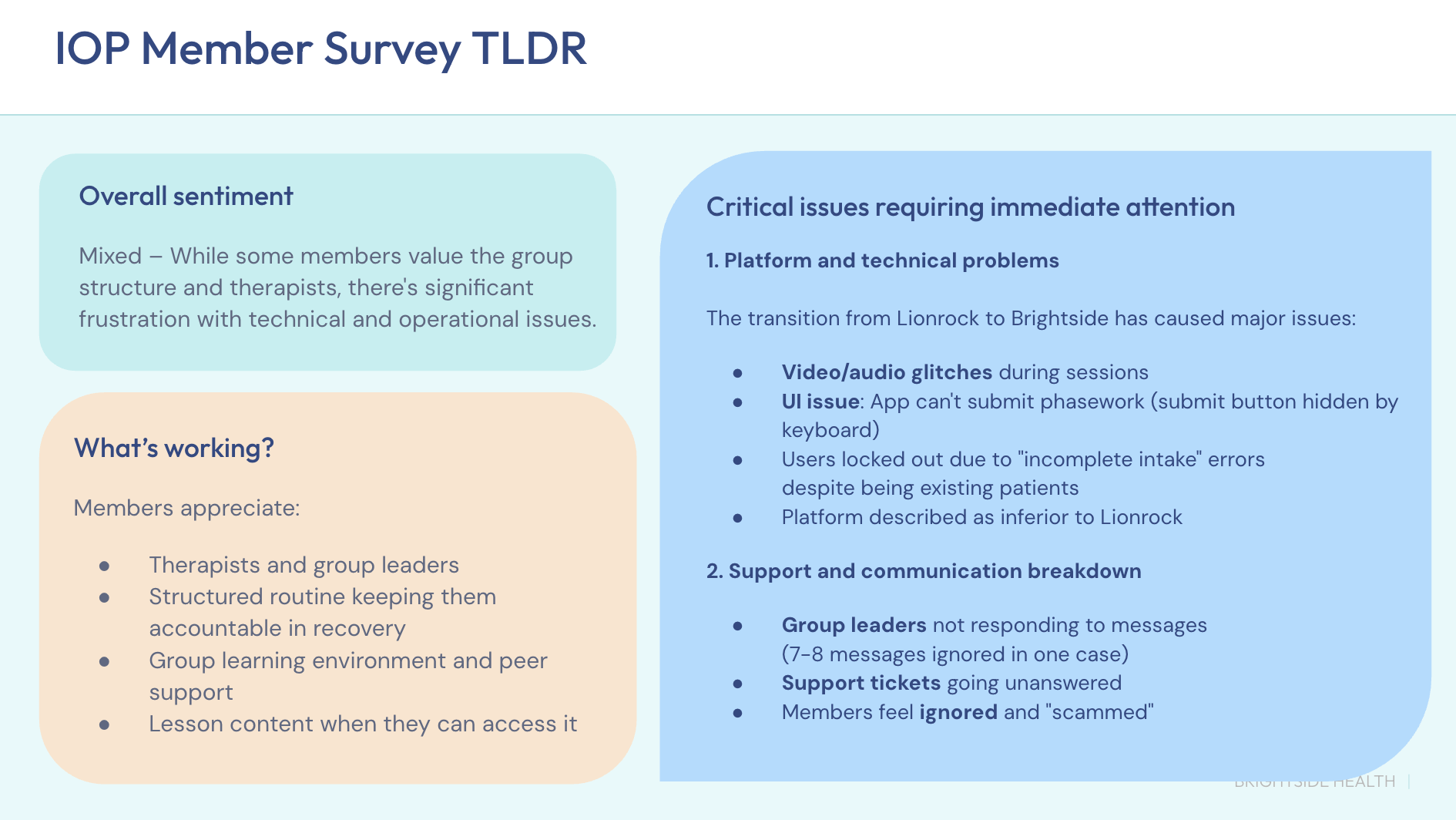
Sent a survey to IOP members to track engagement, what’s working and not working for them to keep improving our product and services
Outcomes
Launched a fully virtual IOP for mental health and substance use recovery
Created a cohesive experience across group care, 1:1 therapy, psychiatry, and self-help tools
Enabled members to message their care team and connect with peers
Supported both insurance and self-pay models
Early feedback shows strong engagement with group therapy and content
87% of Brightside IOP graduates report an improved quality of life
Member attendance was at 72% (2 months after launching the plan) showing moderate-high engagement. Those who attended sessions spent an average of 132 minutes actively participating
(sessions are scheduled for 180 minutes), highlighting the program's value for engaged members.The no-show rate was 28%, pointing to potential barriers we need to address
to improve consistency.
Feedback from members and therapists that shaped and motivated this work
"It has been an exciting experience to begin facilitating OP groups through Brightside!
The members are engaged in their treatment and it's neat to see how they support and encourage one another in their healing journey."
IOP Therapist B.T.
“This IOP group has been a major learning experience and contributor to my growth.
I was nervous about it at first but learned to love it and look forward to it as the weeks progressed.
I'm sad to see it come to an end but very grateful to have been a part of it. Again, thank you, this has been a wonderful experience and have no doubt it will benefit my mental health in the long run.”
IOP Member S.L.
“This experience was truly wonderful. It helped me feel less alone and supported in a way I didn’t expect.
I feel more confident navigating my challenges and genuinely better overall. The facilitators were incredible, and I sincerely hope Brightside continues offering this kind of care.”
IOP Member A.H.
Final Thoughts
Designing for IOP meant designing for vulnerability, transformation, and trust.
This work has been especially meaningful—creating a digital experience that helps people access
deeper support during some of the most critical moments in their lives.